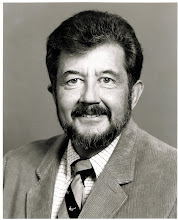
An eclectic blog (November, 2009, through December, 2012) with sections on Biography, Commentary (General, Economics and Investing), Fiction, Health Care, Oil and Gas, Politics, Photographs, and Poetry (Children's Poems, General, Health, and Space Poems): http://stopcontinentaldrift.blogspot.com/2011/07/reunite-gondwanaland-2009-june-2011.html As of the end of 2012, the blog contains 200 items.
The items with the most hits continue to be: You Are So Lucky (Biographical) with 223 hits [http://stopcontinentaldrift.blogspot.com/2009/11/you-are-so-lucky.html] and Muammar Qadaffi And Me (Biographical) with 213 hits [http://stopcontinentaldrift.blogspot.com/2010/12/muammar-qaddafi-and-me-biographical.html]. The former was no doubt popular because of the Great Japanese Earthquake of 2011 and deals with my first three days in Japan in 1965. The latter was popular because of the overthrow of the Libyan dictator Qadaffi. As for last year's report, there are six others with 100 to 199 hits , none of which are biographical and all from before 2012. One came close, however, with 99 hits: The Salt Content Of Foods from July 7, 2012: http://stopcontinentaldrift.blogspot.com/2012/08/salt-contents-of-foods.html which was closely followed by The Light from October 13, 2012, a biographical piece with 96 hits: http://www.blogger.com/blogger.g?blogID=112427639902898514#editor/target=post;postID=6263706723454027302
Each piece I have written is like a child and I love them all, but it is common that some children are loved more than others. My personal favorite continues to be the Effectiveness Of Taxes from May 7, 2010 with 57 hits [http://stopcontinentaldrift.blogspot.com/2010/05/effectiveness-of-taxes.html] followed by Basics of Bureaucracy from July 26, 2011 with 124 hits [http://stopcontinentaldrift.blogspot.com/2011/07/basics-of-bureaucracy.html]. In the former, I point out why decreasing taxes on individuals is an inefficient way to stimulate the economy. I liked this so much that I refer to it in three other pieces. Alas the reading public did not agree as to its great value. In the latter that was written many years ago, I give some real rules of dealing with bureaucrats in a humorous fashion.
Let me give two Honorable Mentions. I wouldn't say this is a favorite of mine, but it can be important to some, i.e. Preferred Stock Investing from November 27, 2011 with 167 hits (picked up about 30 more hits in 2012) [http://stopcontinentaldrift.blogspot.com/2011/11/preferred-stock-investing.html]. I have invested for about 60 years, but never got involved in preferred stocks until the last decade. I would also like to mention one poem Upon the Second Anniversary Of Apollo 11 from January 9, 2010 with only 7 hits, the first landing on the Moon [http://stopcontinentaldrift.blogspot.com/2010/01/upon-second-anniversary-of-apollo-11.html]. Normally a couplet or more just pops into my mind and I construct a poem around it (An example is So How About An Asteroid from July 20, 2011 with 32 hits) that containes my favorite couplet: Who could possiboly be annoyed/About the study of an asteroid. The Second Anniversary of Apollo Eleven, however, was little noticed which I thought was terrible so this was the first time I sat down to compose a poem from scratch.
Showing posts with label taxes. Show all posts
Showing posts with label taxes. Show all posts
Sunday, December 30, 2012


Thursday, July 26, 2012
IS AN INCOME OF $250,000/YR RICH?
Does earning $250,000./yr make you rich? Well, let's see, 80% of U.S. HOUSEHOLDS earned less than $100,065/yr in 2010 and 60% earned less than $61,800/yr.* Perhaps at least 80% of the population might be excused if they feel that those in the top 2% of earners ($250,000+/yr) are rich.
But what about the poor small business people? Please remember that a small business is one that has fewer than 500 employees, a number that includes some pretty big companies, if you ask me. Only 3% of all small businesses earn more than $250,000/yr according to the Joint Committee on Taxation. And the number of small businesses affected by letting the Bush tax cuts expire for those earning over $250,000 are estimated to be only 1.5% by the Center on Budget and Policy and the Tax Policy Tax Center. Even if you count only those small businesses that have at least one employee (Why you would do this I don't know, but I guess to spin the problem into a large sounding number.), the number earning in the top two tax categories increases to only 24%. Perhaps of some significance, however, is that these "large" small businesses hire 93% of the people in the small business category.
But something missed in all this is that small businesses that choose to have their business profits taxed as income, do so because there is some tax advantage (or from laziness). I give some references below, but there are many.** To give just one example, there is a tax credit for hiring a new employee and keeping them for a year or more. Heck, even we benefit from various tax deductions, and we earn less than half the $250,000. Also something missed in all this is if you earn, say, $300,000, you will pay the increased income tax only on the amount that exceeds $250,000. There are those who, incorrectly, seem to feel that you would pay the increased tax on the whole amount.
* http://www.census.gov/hhes/www/income/data/historical/household/2010/H01AR_2010.xls
** http://smallbusiness.aol.com/2011/02/08/overlooked-small-business-tax-deductions-5-things-you-need-to-k/
http://www.openforum.com/idea-hub/topics/money/article/31-small-business-tax-deductions-1
http://www.unclefed.com/AuthorsRow/Daily/fwddeductions.html
Monday, September 20, 2010
WELFARE FOR THE WEALTHY
A recent Wall Street Journal had a major article titled The Estate Tax (Monday, September 20, 2010). In writing for "Get Rid Of It", Ed McCaffery in "It's Unfair, and There's a Better Way" curiously says "It is a simple moral case..." In a country that prides itself on the Judeo-Christian work ethic, it would seem to me that the moral case is that there should be no inheritance, that every generation should start from scratch. Even in this case, the children of the wealthy would have an advantage because of better education and health care. Besides, inheritance, at least a large inheritance, promotes sloth just as welfare for the poor is thought to promote sloth. Inheritance is just promoting sloth for the wealthy. In this regard, I agree with Michael J. Graetz who authored the "Keep It" article "It's Fair, and We Need The Revenue" and who wrote, "On the other hand, large tax-free inheritances do encourage their recipients not to work. People who receive large inheritances are about four times more likely to drop out of the labor force than those who inherit only small amounts."
Still, I realize that deep in people's hearts is a desire to leave something to their children and maybe other heirs, besides debts, even though most families cannot do so. Under the previous inheritance law, the first $3.5 million in inheritance was exempt from taxation (up from $1 million before that), and the tax on the balance was 45% (down from 55% before that). It seems to me that this is very generous. After all, an income of 5% from a $1 million inheritance, a percentage easy to attain, is $50,000/year, a sum actually somewhat above the median FAMILY income of 2009 ($49,777).* It seems to me that the previous law on inheritance tax was more than generous concerning inheritance, and would hardly encourage the wealthy to "spend it all" during their lifetimes and die broke as Ed McCaffrey suggests.
*http://en.wikipedia.org/wiki/Median_household_income
Subscribe to:
Posts (Atom)