Showing posts with label sea level rise. Show all posts

Tuesday, February 11, 2014

IS THE ATMOSPHERE AN INFINITE SEWER?


Nearly 25 years ago I gave an address at the University of Missouri at Rolla (now Missouri University of Science and Technology) called The Challenge of Global Housekeeping.*  Is the atmosphere an infinite sewer into which we may dump all the pollutants we want? I conclude that it appears to be not so, and we have pretty much reached a limit where both anthropogenic global warming and ocean acidification are occurring. Of the 10 warmest years globally, 9 have occurred in this century and the outlier was 1998:**


10 warmest years on record anomaly from 1901–2000 mean)
YearGlobal[66]Land[67]Ocean[68]
20100.65901.07480.5027
20050.65231.05050.5007
19980.63250.93510.5160
20030.62190.88590.5207
20020.61300.93510.4902
20060.59780.90910.4792
20090.59570.86210.4953
20070.59141.08860.3900
20040.57790.81320.4885
20120.57280.89680.4509


The information is given as departures from the mean global temperature from 1901 to 2000 in (°C).  The article cited also gives a table (reproduced below) showing the departures from the 1951 to 1980 mean by decade:**  The three decades beginning with 1980 are seen to be the only ones warmer than the mean by at least 0.100 (°C).  There is a "cooling plateau" between 1945 and 1976 that is attributed to increasing anthropogenic sulfate aerosols that have a cooling effect; however, these emissions have been curtailed.


YearsTemp. anomaly
(°C anomaly (°F anomaly) from 1951–1980 mean)
1880–1889−0.274 °C (−0.493 °F)
1890–1899−0.254 °C (−0.457 °F)
1900–1909−0.259 °C (−0.466 °F)
1910–1919−0.276 °C (−0.497 °F)
1920–1929−0.175 °C (−0.315 °F)
1930–1939−0.043 °C (−0.0774 °F)
1940–19490.035 °C (0.0630 °F)
1950–1959−0.02 °C (−0.0360 °F)
1960–1969−0.014 °C (−0.0252 °F)
1970–1979−0.001 °C (−0.00180 °F)
1980–19890.176 °C (0.317 °F)
1990–19990.313 °C (0.563 °F)
2000–20090.513 °C (0.923 °F)


The global human population is still increasing and as I write this, the estimated global population is 7.2 billion. (1)  Nearly all this population is contributing to atmospheric pollution in some manner through burning wood or peat if not coal, natural gas, and petroleum or the making of cement, of course with some parts of the global population much more than others.  The two countries that contribute the most carbon dioxide to the atmosphere now are China 21.5% and the U.S. 20.2% of the total. (1)

The figure below shows the increase in atmospheric carbon dioxide since 1956 as measured at Mona Loa, Hawaii and is known as the Keeling Curve largely due to the emission of fossil fuels. (2)  This reference contains an extensive discussion of carbon dioxide in the Earth's atmosphere.  Fossil fuel may be separated from modern vegetation carbon through analysis of carbon isotopes.


See an extensive discussion of this figure in http://en.wikipedia.org/wiki/Keeling_Curve Click on the figure for more clarity.


The increase in carbon dioxide in the atmosphere can not only lead to anthropogenic global warming, but there are indications that the surface ocean water is becoming more acidic.(3)

Ocean acidification is the ongoing decrease in the pH of the Earth's oceans, caused by the uptake of carbon dioxide(CO2) from the atmosphere.[2] An estimated 30–40% of the carbon dioxide released by humans into the atmosphere dissolves into oceans, rivers and lakes.[3][4] To achieve chemical equilibrium, some of it reacts with the water to form carbonic acid. Some of these extra carbonic acid molecules react with a water molecule to give a bicarbonate ion and a  hydronium ion, thus increasing ocean "acidity" (H+ ion concentration). Between 1751 and 1994 surface ocean pH is estimated to have decreased from approximately 8.25 to 8.14,[5] representing an increase of almost 30% in H+ ion concentration in the world's oceans.[6][7] Available Earth System Models project that within the last decade ocean pH exceeded historical analogs [8] and in combination with other ocean biogeochemical changes could undermine the functioning of marine ecosystems and many ocean goods and services. (Superscript references are given in the article cited)

This article summarizes only the carbon dioxide contributes to global warming; however, there are other greenhouse gases, the major one being water vapor (because of its abundance), followed by carbon dioxide, methane, nitrous oxide, and ozone.  In addition chlorofluorocarbons (Freon) could have a large effect, but their use is curtailed, though their lifetime in the atmosphere is long.  One major atmospheric pollutant, sulfur dioxide aerosols, actually cool the atmosphere and is attributed to flattening out global warming.

The biggest effect from anthropogenic global warming will probably be from sea level rise due to thermal expansion of seawater and melting of glaciers and ice caps.  Loss of ice cover in the Arctic will not affect sea level, however, it can well disturb many other things, such as ocean circulation and ecosystems.  The country most affected by sea-level rise is Bangladesh that has the highest population density in the world though it has contributed little to global warming.  Even now they experience floods that cover as much as half the country(4):
The construction of big, modern dykes is problematic as well. If sea levels rise up to 1 metre, "normal” flood waves can be expected to increase from presently 7.4 metres to 9.1 metres.7  This shows clearly that coastal dykes must be very high to really protect the inhabitants.

But the U.S. is not immune to the effects of sea-level rise with the largest effects being where the coastal landmass is also sinking.  Storm surges will also have a greater effect because of the higher water level.  Even in recent decades, 47% of sandy beaches have seen "critical erosion" and beach replenishments in places like Miami Beach (1976-1981) have been needed owing to coastal erosion due to longshore currents (5).  Estimates are (6):


                                                         Click on the picture to enlarge.

Twenty-five years later, global housekeeping is more important than ever.

Note added Friday, 02-14-2014:  Now it turns out that because methane has 30 times the greenhouse effect as carbon dioxide, losses to the atmosphere in drilling and other leakages may make natural gas worse than diesel fuel (http://www.nytimes.com/2014/02/14/us/study-finds-methane-leaks-negate-climate-benefits of-natural-gas.html?partner=rss&emc=rss&wpisrc=nl_wonk)

References:
* http://stopcontinentaldrift.blogspot.com/2014/01/global-housekeeping-challenge-is-issued.html; Geotimes, 1990, p. 6.
** http://en.wikipedia.org/wiki/Instrumental_temperature_record
(1) http://www.worldometers.info/world-population.
http://en.wikipedia.org/wiki/Carbon_dioxide_in_Earth's_atmosphere
(2) http://en.wikipedia.org/wiki/Carbon_dioxide_in_Earth's_atmosphere; http://www.google.com/search?q=Carbon+Dioxide+in+the+atmosphere&client=safari&rls=en&tbm=isch&tbo=u&source=univ&sa=X&ei=BF_pUvqACOnJsQS3uYCQDg&ved=0CDcQsAQ&biw=1280&bih=902
(3) http://en.wikipedia.org/wiki/Ocean_acidification
(4) http://germanwatch.org/download/klak/fb-ms-e.pdf
(5) http://coastvserosion.wikispaces.com/Miami+Beach+Replenishment+Plan
(6) http://www.epa.gov/climatechange/impacts-adaptation/coasts.html

Sunday, January 26, 2014

GLOBAL HOUSEKEEPING: The Challenge Is Issued (1990)


Comment:    From Geotimes, 1990, p. 6

A revolution in research, especially Earth-Science research, began in the 1970s as the public became more concerned about the environment.  It was on the first Earth Day, April 22, 1970, that the famous cartoon character Pogo rendered his immortal phrase, “We have met the enemy an’ he is us.”

However I prefer to begin with the Clean Air Act of 1970 because this was the beginning for major funding for environmental studies.  Although the act is not perfect and often criticized, figures from EPA show that particulates, sulfur dioxide, and carbon monoxide all have decreased markedly in our air.

The Clean Water Act of 1972 followed the Clean Air Act.  Progress has been slower for water, but some key pollutants, such as lead, have decreased significantly.

We earth scientists know that, “The present is the key to the past,” so we normally look backward in time.  In the environmental and natural hazards areas, the present and the past can also be used to forecast the future. Climate is an example of how geologic prediction can be used most effectively.  And now, climate issues are of global concern.

We have become increasingly aware through the global politics of the last year, that we are citizens of one world, that many of the actions we take not only affect us but others as well.  Global housekeeping is a challenge for us all.


Release of gaseous pollutants into the atmosphere knows no national boundaries.  We are learning that things done with the best intentions can foul the global environment.  We have learned just how difficult it is to produce something that is totally benign, yet beneficial to humanity.  For example, chlorofluorocarbons (CFCs) – those wonder compounds developed as nontoxic, nonexplosive, colorless, odorless refrigerants to replace the dangerous ammonia and  sulfur dioxide – degrade the ozone layer in the stratisphere.

Evidence indicates that certain gases (carbon dioxide, methane, nitrous oxide, CFCs, and ozone) are increasing in the troposphere.  These radiatively active gases let short wavelength radiation from the sun pass through Earth’s atmosphere yet absorb heat reflected from Earth.  In the simplest model, the heat absorbed from the troposphere will be proportional to the amount of these radiatively active gases – the more of these gases, the higher the global temperature.  This concept is now well known as the “greenhouse” effect.

If the greenhouse effect develops as general circulation models suggest it will, consequences will accompany increasing global mean temperatures.  The global warming will be greater at higher latitudes than near the equator; winters will warm more than summers, and midcontinent areas will experience increasing dryness.  Some other possible consequences are that sea levels may continue to rise, perhaps by a half meter or more, and violent storms may increase in number and severity.  Increased temperatures in the troposphere could result in cooling of the stratisphere which, with CFSs in the stratosphere, could result in deterioration of the ozone layer.

However, neither rising sea level nor increasing temperature is a necessary consequence of the increasing human contributions of greenhouse gasses.  Even with some increase in increased warming, expected increases in resulting precipitation might result in accumulation of snow and ice in polar regions rather than in melting of the ice caps.  It is possible that greenhouse could be counterbalanced.  For example, warmer temperature should result in more evaporation of ocean water, increasing the humidity of the atmosphere.  More humidity means more moisture is available for forming more low-level clouds that could have a cooling effect.  The increase in low-level coulds need not be large, only about four percent, to completely counteract the expected greenhouse effect over the next 50 years.  Were it not for the geologic record, researchers could easily develop models where the global mean temperature remains constant.  However, the geologic record shows that temperature fluctuates and that it is about as warm now as it has been at any time in the last two million years.

All this has been well covered by the news media.  But seldom considered is the likelihood of some changes occurring from greenhouse gas buildup even without global warming.  For example, increasing carbon dioxide would have a fertilizing effect and increased cloudiness might also result in increased precipitation.  Both of these possibilities could stimulate plant growth.  Of course growth of weeds would also be stimulated, and increased precitation might cause flooding.  Global warming is receiving considerable official attention.  The number of congressional hearing on the topic has increased; global change is a presidential initiative; and plans are well advanced for congressional action.  Whether we are convinced that the proposed warming will or will not occur, most of us agree that it is dangerous to let these greenhouse gases accumulate.

But we should not delude ourselves.  The prime source of basic energy for the next 20 years is going to be coal.  The quickest and largest savings on carbon-dioxide emissions can be expected to come from conservation.

Maximizing natural-gas and solar-power use as well as major reforestation efforts will help.  The value of nuclear power will be reconsidered.  As to long-term options, the major effort in the U.S. in on nuclear-fusion power with a budget of about $350 million a year.   Also, several other countries are exploring the use of hot-dry rock geothermal power.

As we work toward a better future, it is bound to be a bumpy course.   However, as for now, we can take some comfort that life expectancy is still increasing in spite of current levels of pollution.  The global population is growing, but, so far, technology has kept ahead, in spite of changes in climate.  Food distribution may be a problem, but currently food production is not.

To create an even better life will be a challenge just as it always has been.  This challenge is going to require hard work and all kinds of talent: We will need geologists as well as engineers, philosophers as well as scientists, and, perhaps, informed teachers most of all.

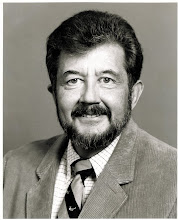
Bruce R. Doe     
Mailstop 923, U.S. Geological
Survey, Reston, Va. 2209

The University of Missouri, Rolla, presented Doe with an Honorary Doctor of Science degree last May at its graduation ceremony. The text here is adopted from a speech Doe made for the occasion.